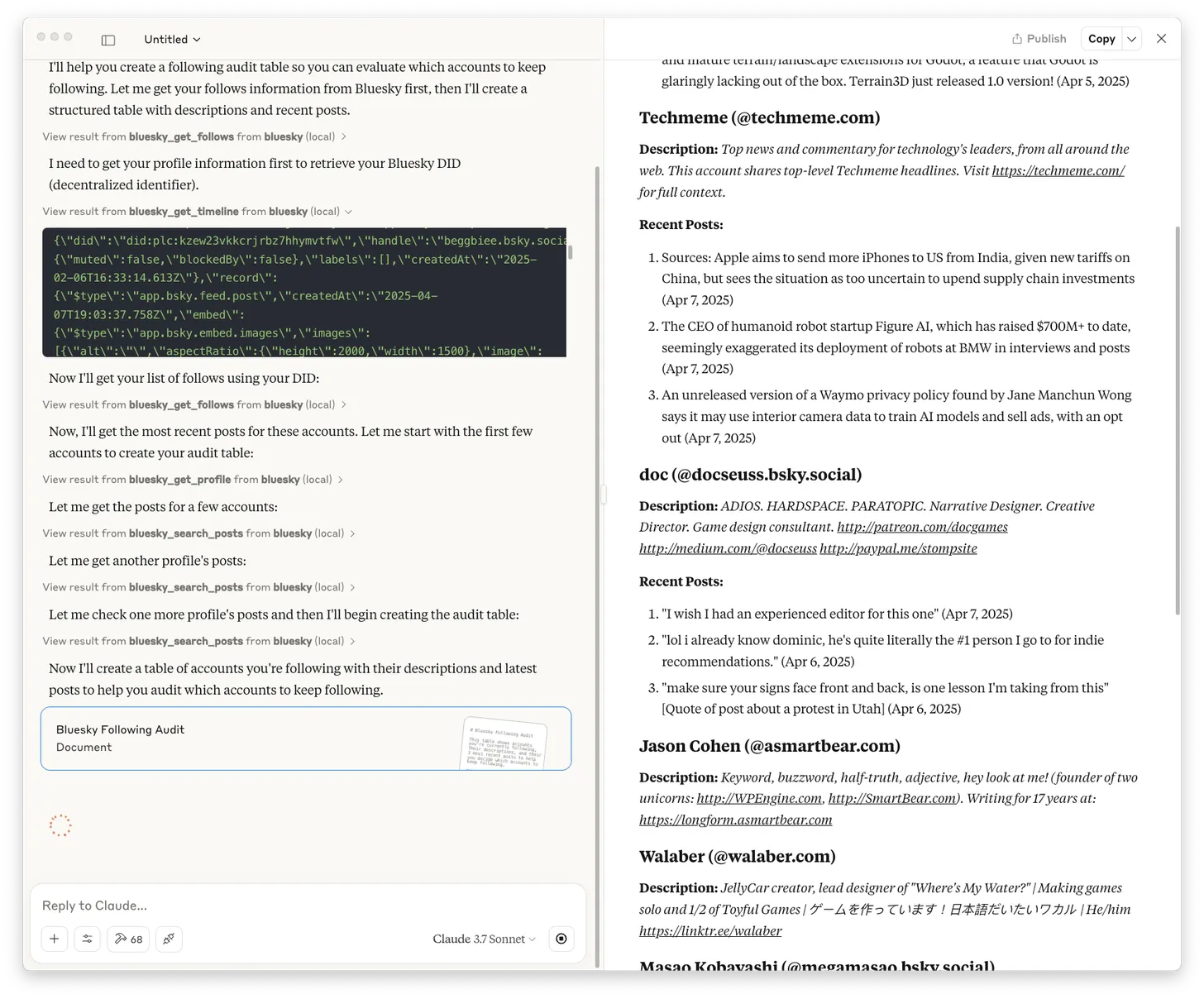
Model Context Protocol (MCP) has clear limitations for certain applications. I experimented with adding a Bluesky MCP to Claude for reviewing followed accounts, but encountered reliability issues where the model does not finish the job, or simply fails to execute on specific asks.
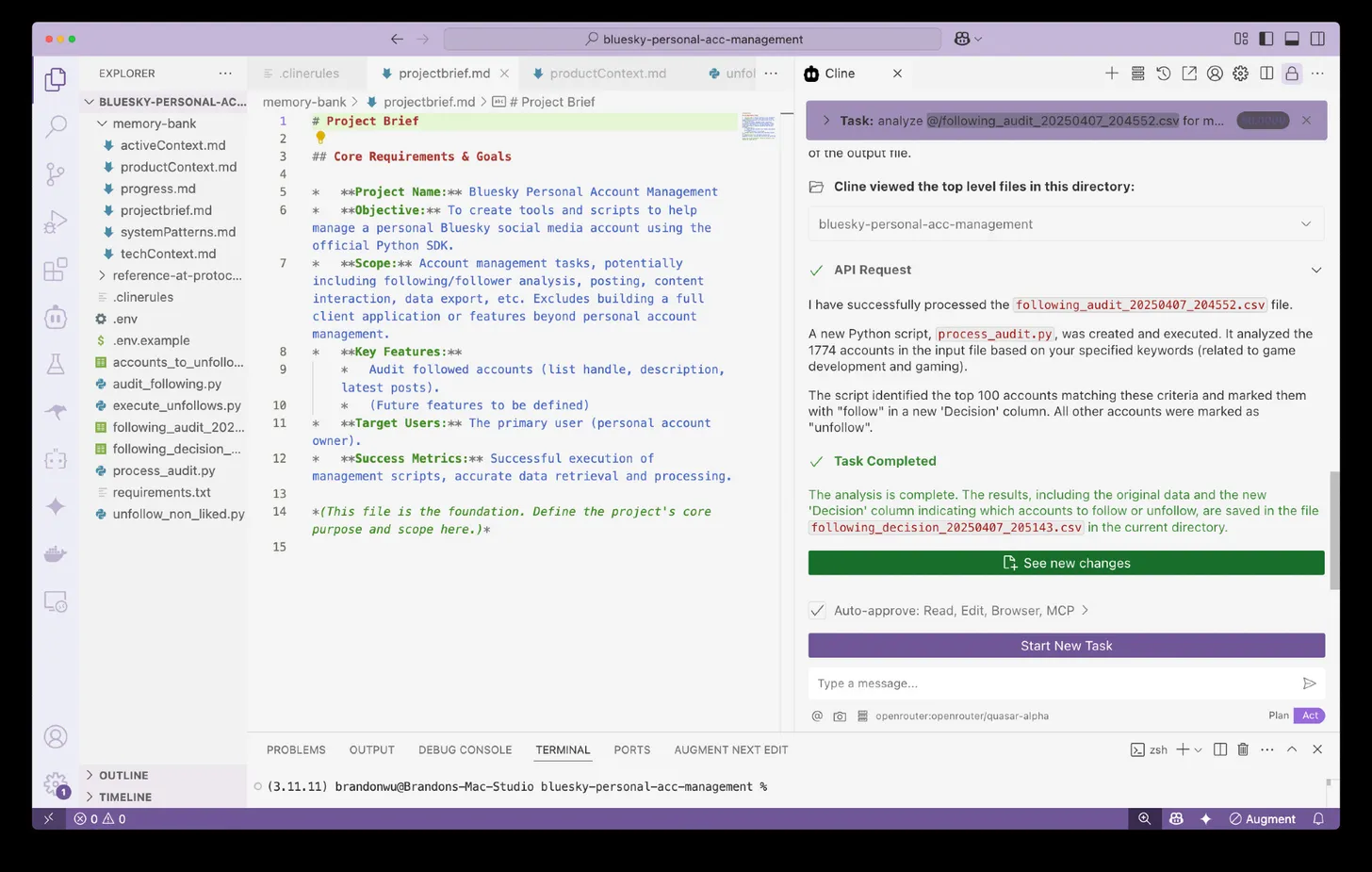
Rather than continue troubleshooting the MCP approach, I pivoted to a hybrid solution using Visual Studio Code with CLINE. By adding the Bluesky SDK directly to a project folder and requesting code generation instead of MCP tool usage, the outcome improved significantly.
Key Advantages of Direct SDK Integration
The direct coding approach offers several benefits:
- Reliability: Code execution removes uncertainty present in MCP interactions
- Error Resolution: Issues are properly addressed within the development environment
- Reusability: Generated code persists in the project for future implementation
- Simplicity: The experience remains conversational — still chatting with Claude 3.7 Sonnet through the IDE interface
- Functionality: CLINE’s memory bank feature supports enhanced context management
Broader Implications
AI-powered IDEs are evolving beyond traditional coding environments. With agent capabilities integrated into tools like Visual Studio Code, the IDE increasingly functions as my everything-app, not just my coding environment.
This shift suggests developers should evaluate whether MCPs or direct SDK integration better suits their specific use cases. MCPs shine for interactive, real-time tool use within a conversation. But when you need something reliable, repeatable, and persistent — write the code.